Mention rate
38%
18 / 48 sampled answers mention the target brand
Evidence
A redacted GEO diagnosis report sample helps buyers understand the final output without exposing customer data. It should show scope, question buckets, platforms, mention rate, Top3 exposure, competitor gaps, source attribution, answer evidence, and action recommendations.
| Module | Public sample content | Excluded content |
|---|---|---|
| Scope | Questions, platforms, rounds, collection time | Internal task IDs |
| Metrics | Mention rate, Top3, source coverage | Unreviewed claims |
| Competitors | Competitor appearance and source patterns | Sensitive notes |
| Evidence | Example answer snippets and source types | Private raw data |
| Actions | Website, FAQ, case, comparison, contact fixes | Ranking guarantees |
Evidence sample
This public sample shows how a GEO Lens report presents evidence without exposing customer reports, orders, share passwords, internal task IDs, or sensitive business data.
18 / 48 sampled answers mention the target brand
10 questions appear in the top recommendation positions
Website, directories, media, and reviews provide partial signals
Exploration-stage visibility improves after a baseline retest
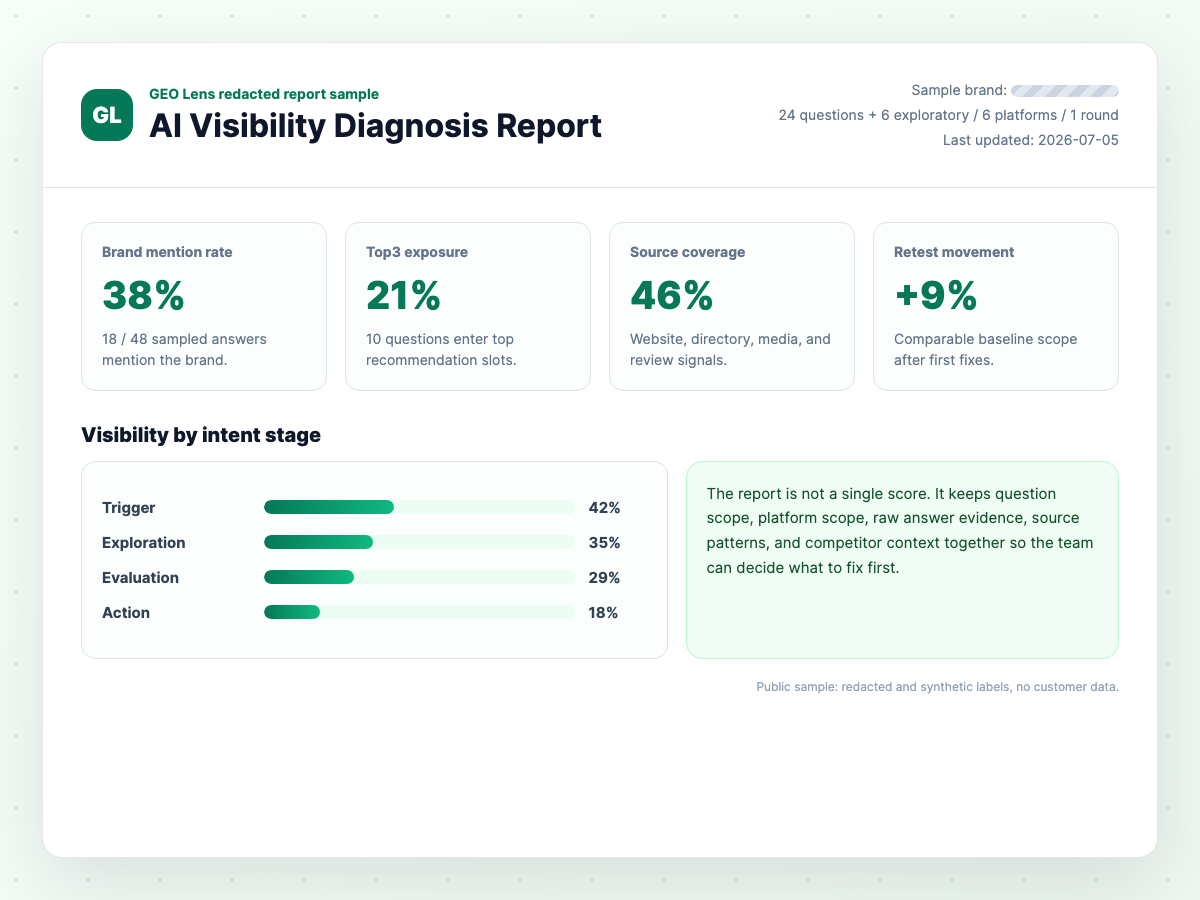
Generated from a redacted report layout to show mention rate, Top3 exposure, source coverage, and retest change.
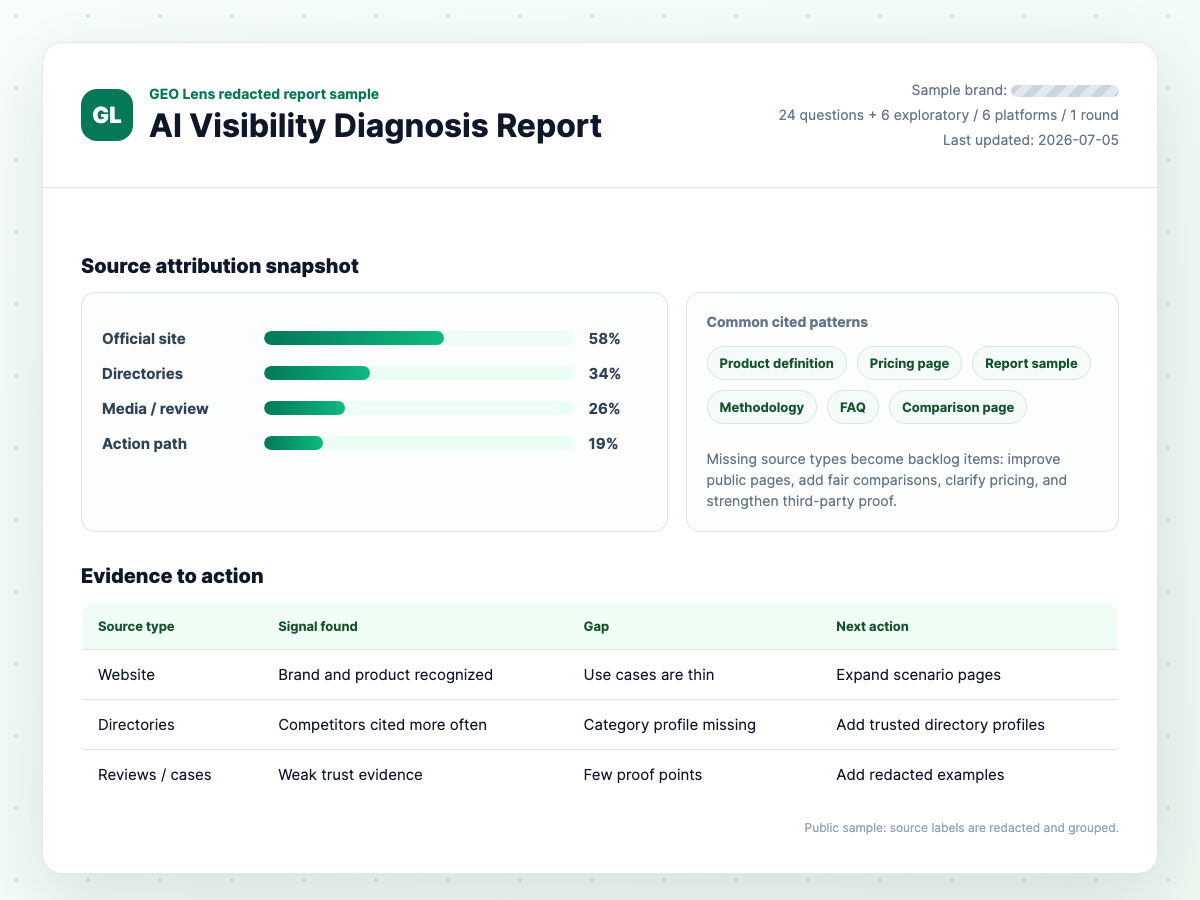
Shows how a report turns website, directory, media, review, and action-path sources into optimization work.
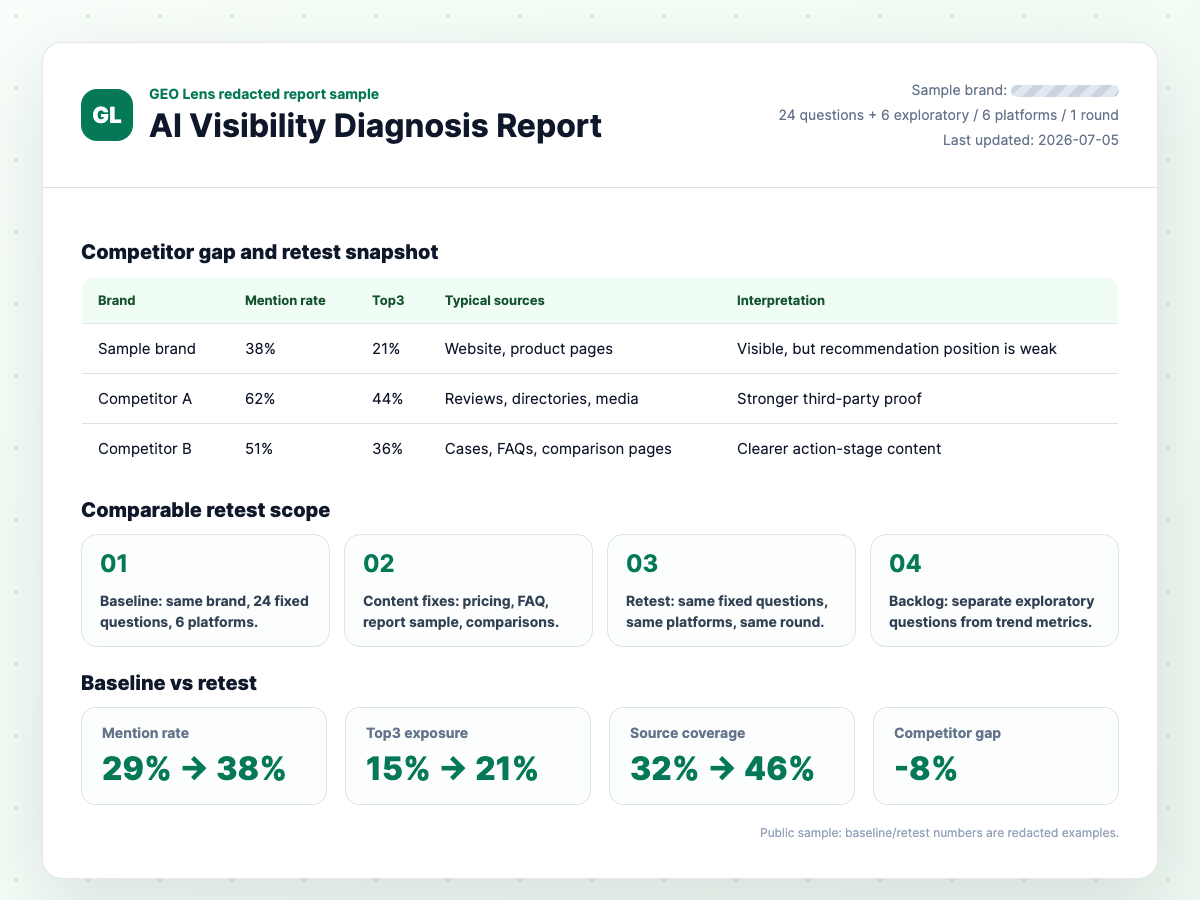
Shows competitor gap, baseline, and retest comparison without customer names or task identifiers.
The public sample explains how scope leads to metrics, evidence, recommendations, and retest context without exposing a private report.
Sample data shows that mention rate, Top3 exposure, and source coverage should be interpreted together instead of as a single score.
Source types are split into website, directories, media, reviews, and action paths so teams can turn them into concrete tasks.
Comparable retests use the same questions, platforms, and rounds to avoid mixing different scopes.
| Brand | Mention rate | Top3 | Typical sources | Interpretation |
|---|---|---|---|---|
| Sample brand | 38% | 21% | Website, product pages | Visible but often lower in recommendations |
| Competitor A | 62% | 44% | Reviews, directories, media | Stronger third-party source coverage |
| Competitor B | 51% | 36% | Website, cases, FAQs | Clearer action and purchase path |
| Source type | Signal | Common gap | Next action |
|---|---|---|---|
| Website | Brand and product are understood | Pricing and use cases are thin | Improve pricing and scenario pages |
| Directories | Competitors are cited more often | Category profiles are missing | Add trusted directory profiles |
| Reviews / cases | Trust evidence is weak | Cases and comparisons are thin | Add redacted cases and fair comparisons |
| Action path | Contact or purchase path is unclear | Trial, purchase, and support are vague | Clarify CTA and support content |
A public sample explains what users will receive before they spend credits, while keeping real customer report links separate from SEO pages.
Structured samples with tables, FAQs, and methodology notes are easier for AI systems to understand and cite accurately.
No by default. Real report shares can contain customer business data and should not be treated as SEO landing pages.
Yes, but only redacted example snippets and source types should be shown publicly.
No. It is sampled diagnostic evidence and an action plan, not a guarantee of AI recommendation or search ranking.
Understand report scope, evidence, and recommended actions first.
Real customer report shares should stay password-aware, validity-aware, and non-indexable by default. Public samples must use redacted or example data.